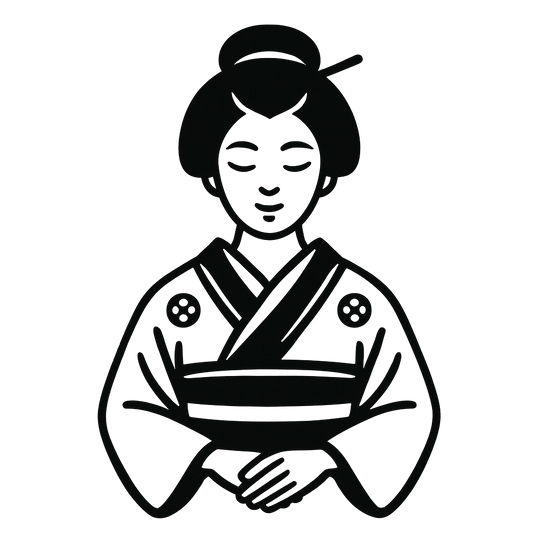

Echoes of Japan #1: Why Traditional Japanese Fashion Continues to Inspire Us Today
Japanese fashion - A style that never dies!
The world moves faster every day. Trends are born on social media feeds and die in landfill bins within weeks. Yet, amidst this frantic cycle of "fast fashion," a steady, quiet power continues to emanate from the East. Traditional Japanese fashion remains one of the most significant and consistent sources of inspiration for designers, stylists, and enthusiasts worldwide.
But why? Why does a silhouette designed hundreds of years ago for a feudal society still look "futuristic" on the streets of London, New York, or Berlin? The answer lies not just in the fabric, but in the profound Japanese fashion philosophy that views clothing as an extension of the soul and a dialogue with nature.
The Foundation of Japanese Aesthetics
To understand why Japanese style is so infectious, we must first understand the visual language of the archipelago. Japanese aesthetics are governed by principles that often stand in direct contrast to Western ideals of beauty.
While Western fashion has historically obsessed over the "Hourglass" figure—emphasizing curves, cinching waists, and molding fabric to the body—traditional Japanese fashion focuses on the "Columnar" silhouette. In kimono culture, the goal is to create a smooth, flat surface where the artistry of the textile can shine. This approach creates a sense of dignity and mystery, allowing the garment to exist as an independent structure.
Wabi-sabi: The Beauty of Imperfection
At the heart of Japanese heritage clothing is the concept of Wabi-sabi. It is the appreciation of the transient, the weathered, and the imperfect. In modern Japan-inspired fashion, this manifests as raw edges, natural dyes that fade beautifully over time, and a preference for organic textures like hemp and linen.
Ma: The Importance of Space
Perhaps the most important concept in the Japanese fashion philosophy is Ma, or the "negative space." In Japanese clothing history, the space between the skin and the silk is just as important as the silk itself. This "breathing room" is what gives Japanese streetwear its signature oversized, fluid look—a style that Tengura has mastered for the modern urban wanderer.

A Journey Through Japanese Clothing History
To appreciate the "Now," we must respect the "Then." Japanese clothing history is a saga of adaptation and refinement.
The Heian Period: Layers of Status
During the Heian period (794–1185), traditional Japanese fashion reached a peak of complexity. The Junihitoe, or twelve-layer robe, was the pinnacle of courtly elegance. Here, color coordination wasn't just about looking good; it was a sophisticated language of seasonal poetry and social rank. This deep attention to detail remains a cornerstone of kimono culture today.
The Edo Period: The Birth of Street Style
It was during the Edo period (1603–1867) that Japanese style began to filter down to the common people. As the merchant class grew wealthy, sumptuary laws were enacted to prevent them from looking "too grand." This led to the "Edo-Iki" aesthetic—a form of understated chic where the most beautiful patterns were hidden on the linings of coats. This "hidden luxury" is a direct ancestor of the subtle detailing found in high-end Japanese streetwear.
The Meiji Restoration: The Great Fusion
When Japan opened its doors to the West, traditional Japanese fashion faced its greatest challenge. The "Westernization" of the military and bureaucracy introduced suits and uniforms. However, instead of disappearing, Japanese clothing history entered a phase of fusion. We began to see the "Haori" worn over trousers—a look that is a staple of Japan-inspired fashion today.
Kimono Culture in the 21st Century
There is a common misconception that traditional Japanese fashion belongs in a museum. In reality, kimono culture is undergoing a massive revitalization.
The Modern Kimono Movement
Young designers in Kyoto and Tokyo are stripping the kimono of its rigid formalities. They are using denim, leather, and even recycled materials to create garments that can be worn to a rock concert or a business meeting. This "Neo-Kimono" movement is a vital part of Japanese style, proving that the garment is adaptable.
The Influence on Global Runways
From Alexander McQueen to Kim Jones, the structural elements of traditional Japanese fashion are everywhere. The wide sleeves (Sode), the wrap-front closures, and the architectural folding of the fabric are all nods to a Japanese fashion philosophy that values form and function in equal measure.
Japanese Streetwear: The New Vanguard
If traditional Japanese fashion is the root, then Japanese streetwear is the flowering branch. No other country has influenced the "Street" aesthetic as profoundly as Japan.
Why the World Watches Tokyo
Japanese streetwear is characterized by an obsession with quality and a lack of fear regarding proportions. Brands like Tengura take the DNA of Japanese heritage clothing—the durability, the silhouette, the cultural storytelling—and inject it into a modern, tactical context.
The "Urban Samurai" Aesthetic
One of the most popular subsets of Japan-inspired fashion is the "Urban Samurai" look. It combines the pleated volume of Hakama pants with the technical utility of modern outerwear. This is a perfect example of how Japanese fashion philosophy adapts: the discipline of the warrior is translated into the resilience of the city dweller.
Minimalist Japanese Style
On the other end of the spectrum is the minimalist Japanese style. This approach strips away all "noise," focusing on perfect cuts and premium fabrics. It is an expression of Shibui—a beauty that is simple, subtle, and unobtrusive.

Tengura: Bridging Heritage and Modernity
In the landscape of Japan-inspired fashion, Tengura stands as a beacon for those who want to honor the past without living in it.
Craftsmanship as Discipline
The production of Japanese heritage clothing was always a slow, disciplined process. Tengura adopts this mindset, ensuring that every stitch and seam serves a purpose. By focusing on traditional Japanese fashion elements like the Hanten jacket or the Jinbei set and reimagining them for a global audience, the brand keeps the "Echoes of Japan" loud and clear.
Sustainable Japanese Style
Because Japanese fashion philosophy is so closely tied to the cycles of nature, sustainability is an inherent part of the look. Traditional Japanese fashion was designed to be repaired, repurposed, and passed down. By creating high-quality, timeless pieces, Tengura encourages a move away from disposable culture, aligning perfectly with the original spirit of Japanese clothing history.
The Psychological Power of Japanese Style
Why do we feel different when we put on Japan-inspired fashion? There is a psychological weight to traditional Japanese fashion.
Posture and Presence
The structure of Japanese heritage clothing often dictates how you stand and move. A kimono or a structured Tengura coat encourages a straight spine and a measured gait. This is the physical manifestation of the Japanese fashion philosophy: that our external appearance can influence our internal state of mind.
Cultural Storytelling
Wearing Japanese style is also an act of storytelling. Every pattern in kimono culture—from the crane (longevity) to the hemp leaf (strength)—has a meaning. When we incorporate these into Japanese streetwear, we are carrying those ancient blessings into our modern lives.
The Future is Heritage
As we look toward the future of the industry, it is clear that traditional Japanese fashion will continue to be a North Star. In a world that feels increasingly fragmented, the cohesion and depth of Japanese aesthetics offer a sense of grounding.
Whether it’s the rugged utility of Japanese streetwear, the elegant discipline of kimono culture, or the avant-garde experiments of brands like Tengura, the "Echoes of Japan" remind us that true style is timeless. Japanese style isn't just about what you wear; it's about how you see the world—with respect for the old, an eye for the new, and a constant search for harmony.
The Japanese fashion philosophy teaches us that fashion can be a form of meditation. By choosing Japan-inspired fashion, we aren't just following a trend; we are joining a conversation that has been happening for over a thousand years.
Would you like me to focus on a specific era of Japanese clothing history in a future post, or perhaps provide a detailed guide on how to integrate Japanese heritage clothing into a modern Western wardrobe?